.svg)
Research
Infrastructure remains one of the most significant constraints across Africa’s critical minerals value chain. Reliable power influences whether mines can expand production and move into processing. Rail and port capacity influence whether copper, cobalt and other strategic minerals can reach global markets at competitive cost.
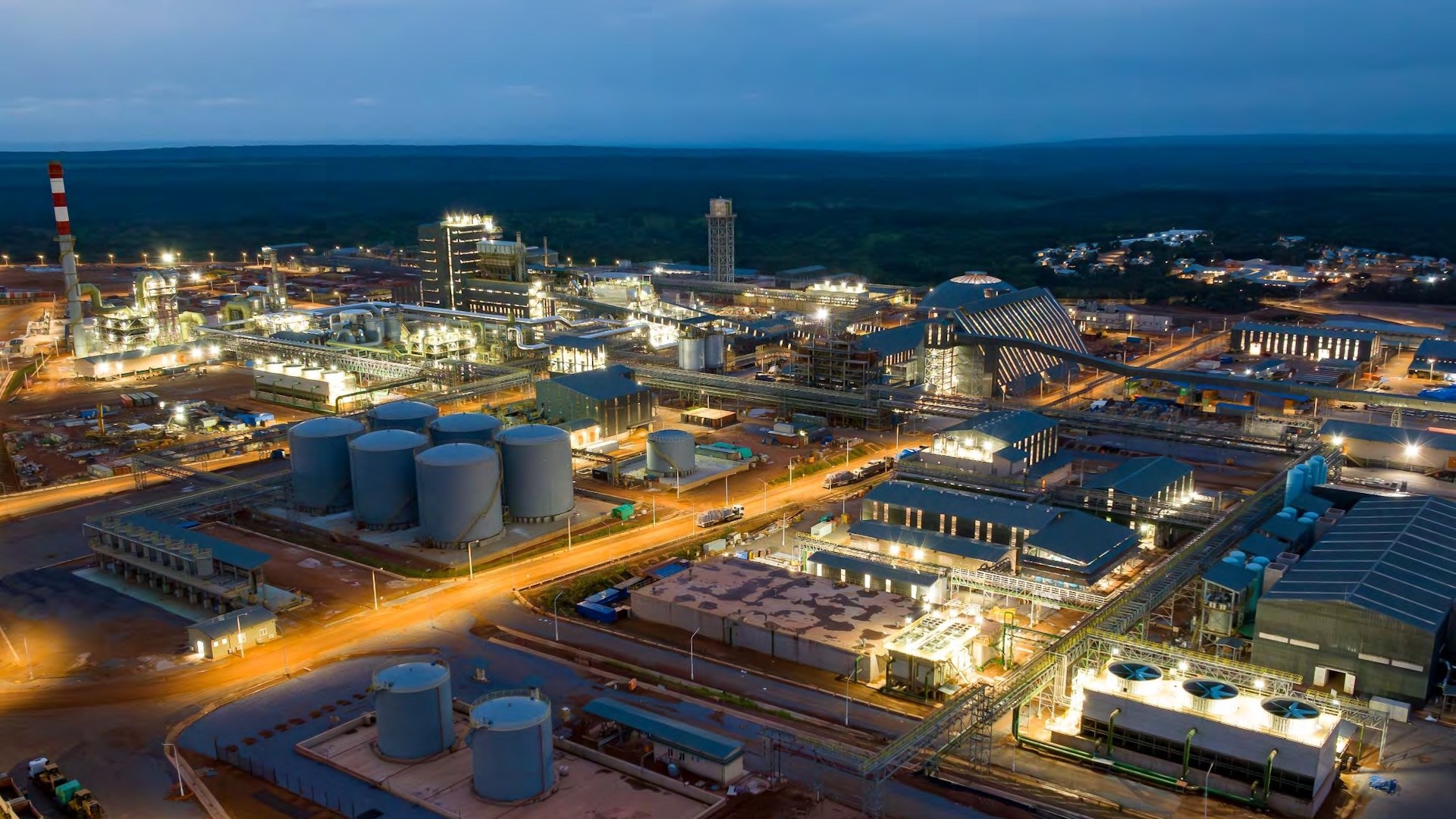
Infrastructure remains one of the most significant constraints across Africa’s critical minerals value chain. Reliable power influences whether mines can expand production and move into processing. Rail and port capacity influence whether copper, cobalt and other strategic minerals can reach global markets at competitive cost.
Recent developments in the Central African Copperbelt offer useful examples of how these constraints are being addressed. In the Democratic Republic of Congo, Kamoa-Kakula has supported the rehabilitation of hydropower capacity through a financing arrangement with the state utility, SNEL. Across the Lobito Corridor, development-finance institutions have begun deploying capital into rail and port infrastructure serving copper and cobalt exports from the DRC and Zambia.
These projects are very different in scope and structure. They are linked by a common theme. Infrastructure bottlenecks are being translated into financeable arrangements tied to specific assets, industrial users and mineral flows.
The distinction matters because infrastructure challenges are often discussed at a national level. Investors, operators and governments ultimately have to determine which constraints can be addressed through identifiable projects, which require broader system reform, and which remain barriers to investment.
Kamoa-Kakula is one of Africa’s most significant copper developments. Since entering commercial production in 2021, the operation has expanded through concentrator upgrades, the Phase 3 concentrator and the development of an on-site direct-to-blister copper smelter.
At this scale, electricity forms part of the industrial base. Production growth, processing capacity and operational reliability all depend on power being available in sufficient volume and with adequate stability.
The key infrastructure intervention was the rehabilitation of Turbine 5 at Inga II, a major hydropower station on the Congo River operated by SNEL, the DRC’s state-owned electricity utility. Kamoa Copper entered into a financing arrangement with SNEL to support the turbine upgrade, with the additional power intended to support Kamoa-Kakula’s Phase 3 expansion and associated smelter.
The financing structure is noteworthy because it linked the infrastructure asset directly to the industrial user. Kamoa’s holding company financed the rehabilitation work as a loan to SNEL. Repayment was made through deductions from Kamoa-Kakula’s electricity bills. The hydropower asset, the utility counterparty, the industrial user and the repayment mechanism were all incorporated into a single structure.
By late 2025, the refurbished turbine had completed ramp-up and was delivering approximately 180 MW into the DRC grid. Kamoa-Kakula initially received 50 MW, with additional supply expected as related grid upgrades were completed.
The project did not eliminate wider constraints within the DRC electricity system. It addressed a specific bottleneck that stood in the way of a major industrial expansion.
The implications are visible in Kamoa-Kakula’s processing strategy. The operation’s direct-to-blister copper smelter began heat-up in November 2025 and produced its first copper anodes in December 2025. Once operating at scale, the facility reduces reliance on concentrate exports, supports local processing and produces sulphuric acid for use across the Copperbelt.
Kamoa-Kakula is unusual in both scale and strategic importance. It does not provide a template for every mining project. It does, however, demonstrate how infrastructure investment can be mobilised when the asset is identifiable, the industrial demand is clear, and the repayment pathway is credible.
The Lobito Corridor addresses a different challenge. Its purpose is to connect Angola’s coastal ports with the interior mining and agricultural regions, fostering regional trade, investment and economic development, including movement of copper and cobalt from the Central African Copperbelt to global markets.
Its most advanced financed component is the Lobito Atlantic Railway concession in Angola, which connects the Port of Lobito to Luau near the DRC border. For copper and cobalt producers, the commercial significance lies in access to an additional export route. Historically, many mineral exports have relied on longer and often more congested routes to eastern and southern African ports. The Lobito Corridor is intended to provide an alternative path to international markets.
The financing case rests on whether those mineral flows can support long-term infrastructure investment.
The Lobito Atlantic Railway consortium holds a long-term concession covering the Angolan rail corridor. The infrastructure package includes the Lobito mineral port and approximately 1,300 kilometres of brownfield railway extending from the Port of Lobito to Luau.
In late 2025, Lobito Atlantic Railway secured US$753 million in financing from the US International Development Finance Corporation and the Development Bank of Southern Africa. The financing supports rehabilitation and operation of the Angolan section. The investment is expected to increase transport capacity to 4.6 million tonnes and reduce critical mineral transport costs by as much as 30 percent.
The corridor should still be viewed as an emerging case rather than a completed transformation. Additional links into Zambia and the DRC remain under development, and elements of the wider regional system continue to require financing and construction.
Even so, several important milestones have already been reached. Lobito Atlantic Railway began operations in 2024. The mineral terminal has entered service. In February 2026, EGC and Trafigura announced the first delivery of copper and cobalt to global markets via the Lobito Atlantic Railway.
Infrastructure corridors become commercially relevant in stages: concession award, operating entity, capital mobilisation, rehabilitation, cargo movement and regional integration. Lobito has progressed beyond the conceptual phase, although the full regional system remains under development.
The corridor also carries a strategic supply-chain dimension. Western development-finance institutions view Lobito as part of wider efforts to diversify copper and cobalt export routes. That strategic relevance has helped mobilise long-tenor capital, but execution remains central to the investment case. Freight demand, tariff economics, cross-border coordination, customs efficiency and construction delivery will all influence long-term performance.
Taken together, the two projects demonstrate that infrastructure constraints are not uniform. Each required a different financing structure, different risk allocation and different institutional arrangements. The common feature was the ability to connect infrastructure investment directly to identifiable industrial demand and mineral production.
Kamoa-Kakula addressed a power constraint through a utility rehabilitation arrangement linked to a specific industrial user. Lobito addresses a logistics constraint through a concession-backed corridor structure linked to regional mineral flows.
The two projects allocate risk differently. Kamoa-Kakula sits closer to an operator-led infrastructure solution tied to a particular mine and smelter. Lobito is a corridor-finance case tied to regional trade flows and export infrastructure.
Both also demonstrate the limits of project-level solutions. Kamoa-Kakula continues to depend on wider grid upgrades and system stability. Lobito continues to depend on regional integration and the successful development of additional corridor infrastructure.
Infrastructure finance can reduce specific bottlenecks. Wider country and system risks still matter.
The development of critical minerals projects depends on more than the resource itself. Copper and cobalt operations require reliable electricity, processing capacity, acid supply, rail access and port infrastructure. Processing and refining facilities depend on power, water, logistics, reagents and credible offtake arrangements.
For investors, the lesson is practical. Infrastructure weakness needs to be assessed by structure, not only by country-level deficit. Some constraints can be financed at project level. Some require development-finance participation, guarantees or sovereign support. Some remain obstacles until wider reforms take place.
For governments, the lesson is equally important. Beneficiation and industrial policy require infrastructure pathways that capital can underwrite. Policy ambitions carry greater weight when they are linked to specific power, rail, port and logistics projects with credible financing and delivery mechanisms.
Africa’s critical minerals opportunity will be shaped by the projects and jurisdictions that make infrastructure deliverable. Kamoa-Kakula and Lobito show how that process is beginning to work in practice, while also showing why execution risk remains central to the investment case.
Reference: https://www.reuters.com/world/africa/us-agency-consortium-sign-553-million-loan-angola-railway-revamp-2025-12-17/
The Acorn Structural Conditions Index evaluates how institutional, financial, infrastructure, ESG, and governance conditions interact to shape market investability. The framework measures the weighted influence these factors exert on the ability of capital to deploy, operate, and scale within a market. Due to publication cycles of primary datasets, structural indicators reflect prior-year conditions. YTD figures (as of 1 June 2026) therefore utilise the latest available full-year primary data (2025) pending release of complete 2026 datasets. Primary datasets include multilateral, sovereign, infrastructure, energy, regulatory, and market datasets sourced from institutions including the World Bank, IMF, African Union, UNCTAD, AfDB, and IEA.